Minimally Invasive Hammertoe Surgery: A Better Way Forward
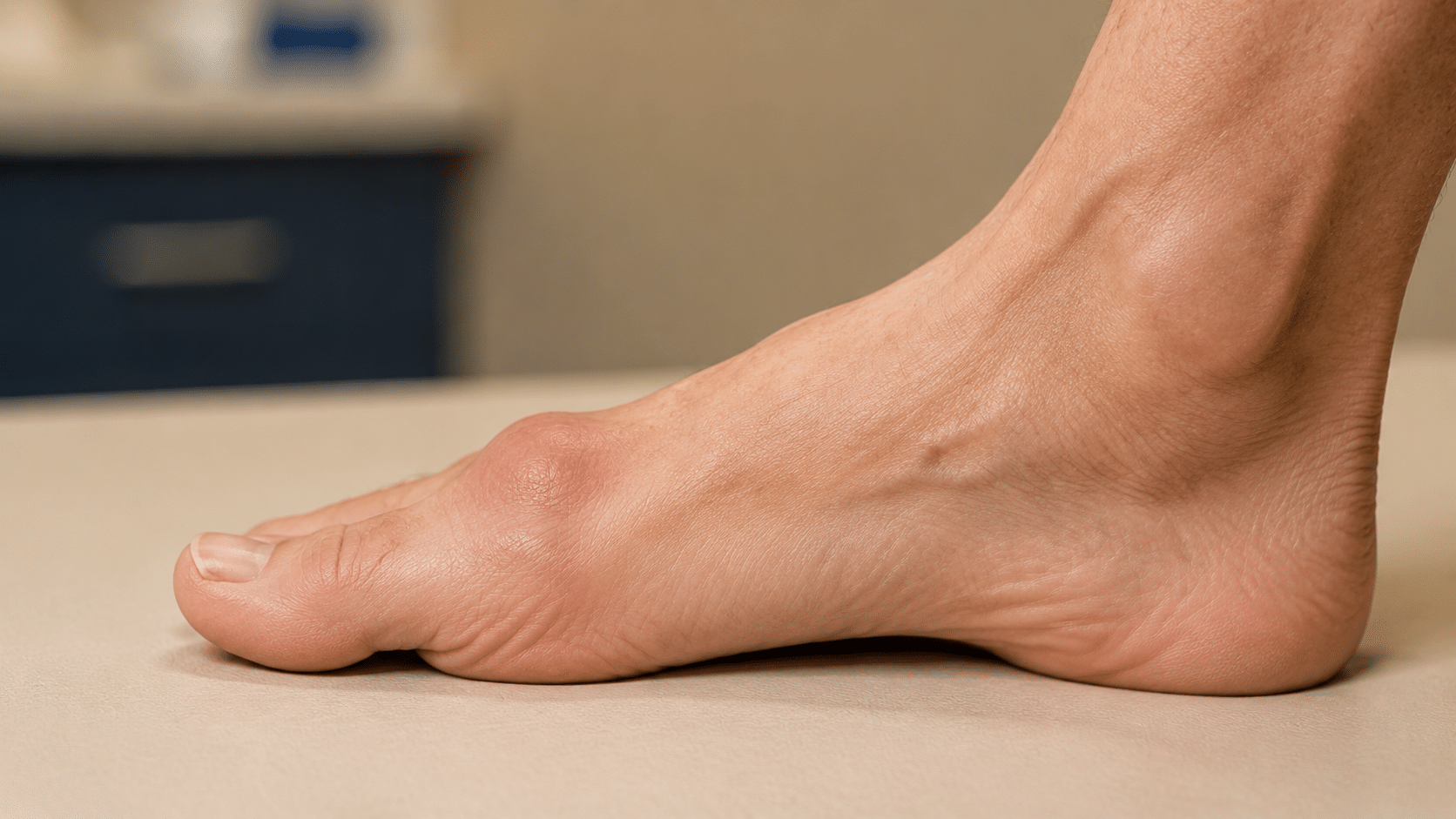
A hammertoe is a relatively small deformity.
I don’t believe fixing it should require an unnecessarily large operation.
Traditional hammertoe surgery commonly means opening the toe, dissecting down to the joint, removing or fusing bone, and then holding everything together with a pin, screw, or implant while it heals.
That approach works.
I also think it is far more surgery than I need for most of the hammertoes I treat.
I trained in traditional foot surgery. I understand why these procedures were developed and what they accomplish. I moved toward minimally invasive hammertoe reconstruction because I found that I could correct many of the same deformities through tiny incisions, with much less disruption to the surrounding tissues, without routinely putting hardware into the toe, and while allowing my patients to walk immediately in a protective surgical sandal.
That is the approach I choose today.
And there is a reason for every part of it.
Why I Prefer Minimally Invasive Hammertoe Surgery
My philosophy in surgery is straightforward:
Create the correction you need while creating as little unnecessary surgical trauma as possible to get there.
Every incision creates an injury the body has to heal.
Every layer of tissue that is opened has to recover.
Every implant placed into the body needs a reason to be there.
And every additional disruption we create during surgery becomes part of the patient’s recovery afterward.
So if I can correct a hammertoe through a few tiny access points rather than opening the entire toe, that is the direction I prefer.
For most of the hammertoes I treat, minimally invasive surgery allows me to combine:
Tiny surgical incisions
Minimal soft-tissue disruption
Local anesthesia
No routine general anesthesia
No routine implanted hardware
No pin sticking out of the end of the toe
Immediate protected walking
Minimal visible scarring
A recovery designed around returning to normal shoes and normal life
That isn’t simply a different incision.
It is a different way of thinking about the entire operation.
Learn more about my surgical philosophy.
Small Incisions Aren’t the Point
Minimally invasive surgery sometimes gets reduced to a discussion about scar size.
That’s missing the bigger idea.
I am not making tiny incisions because tiny incisions sound impressive.
I am using them because they allow me to reach the structures that actually need correction while leaving more of the surrounding tissue alone.
A hammertoe develops because abnormal forces across the toe gradually pull it out of its normal position.
Early on, the toe may still be flexible.
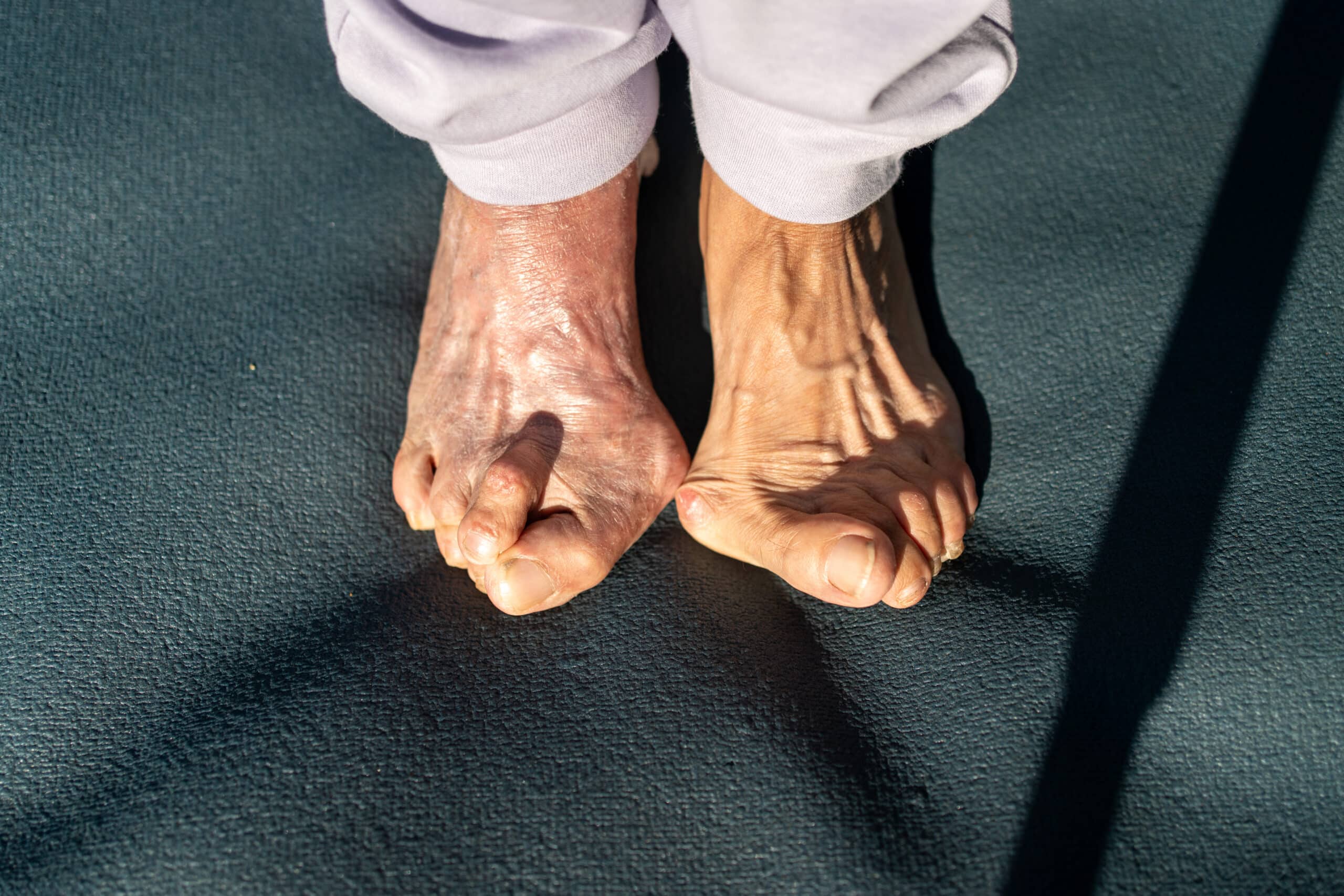
As the deformity progresses, tendons tighten, joints contract, and eventually the bone itself may become part of the fixed deformity.
So when I evaluate a hammertoe, I am not simply looking at a crooked toe and asking how to make it look straight.
I am asking:
What is actually holding this toe in the wrong position?
That determines the correction.
Depending on the deformity, minimally invasive reconstruction may involve:
Releasing contracted soft tissues
Rebalancing a tight tendon
Correcting the position of the bone
Addressing instability where the toe meets the foot
Correcting contributing forefoot mechanics when necessary
The incision is simply my access.
The correction is the operation.
Why I Usually Avoid Pins, Screws, and Implants
This is one of the biggest differences patients notice between what they have heard about hammertoe surgery and the way I perform it.
Many people come to me assuming hammertoe surgery automatically means a metal pin sticking out of the end of the toe for several weeks.
It doesn’t in my practice.
Pins and implants are tools.
I will use a tool when I believe the reconstruction actually needs it.
But I do not put hardware into a toe simply because that is how the operation has traditionally been performed.
When I can create the correction and maintain the alignment with the reconstruction itself, careful postoperative positioning, and external stabilization, that is what I prefer to do.
Most of my hammertoe patients therefore do not require a pin protruding from the toe and do not require a permanent implant.
That isn’t because I have a philosophical objection to hardware.
It is because I have a philosophical objection to unnecessary hardware.
If something is going into your body, I want to be able to tell you exactly what problem it is solving.
If the reconstruction truly needs fixation, I will use it.
But hardware should earn its place in the operation.
Why I Use Local Anesthesia
I also do not believe a small forefoot reconstruction should routinely require a large anesthetic event.
Most of the hammertoe surgery I perform can be done comfortably using local anesthesia.
That means we can often avoid the additional disruption associated with routine general anesthesia: fasting, systemic anesthetic medications, recovery from sedation or general anesthesia, and the additional logistics that surround it.
Again, this is not about proving that one form of anesthesia is universally right or wrong.
It is about matching the treatment to the problem.
If I can comfortably correct the toe with local anesthesia, that is my preference.
The surgery should solve the foot problem without creating unnecessary problems around it.
Yes, My Patients Usually Walk Immediately
Most of my hammertoe patients leave surgery walking in a protective postoperative sandal.
That surprises people because many still assume foot surgery automatically means crutches, scooters, or weeks off the foot.
It does not have to.
I design these corrections around protected mobility from the beginning.
That means I am thinking about stability before I ever make the incision.
I am thinking about how the correction will behave when the patient stands.
I am thinking about how the toe will be positioned afterward.
I am thinking about what needs protection and what does not.
Immediate walking is therefore not something I simply permit after the operation.
It is something I design the operation to accommodate.
That distinction is important.
My goal is not just to make the toe straight while you are lying on an operating table.
My goal is to create a reconstruction that works in the real world—where you have a life to return to.
The Recovery Is Part of the Operation
One of the biggest shortcomings I saw in traditional surgical care was the tendency to think of surgery and recovery as two separate events.
Perform the operation.
Close the incision.
Then wait for the patient to heal.
I don’t think that is good enough.
The operation creates the correction.
The recovery determines what happens to that correction next.
That is why I think about postoperative positioning, swelling control, protected walking, nutritional status, tissue healing, bone healing when applicable, mechanical protection, and the progression back into normal shoes as parts of the same treatment.
A patient with one flexible hammertoe does not need the exact same recovery plan as a patient with four rigid toes undergoing bony correction.
So I don’t hand every patient a generic calendar and tell them that everyone reaches the same milestone on the same day.
I know what I corrected.
I know what needs to heal.
And I manage the recovery around that operation.
The goal is always:
Protect the correction. Keep you mobile. Control the variables we can control. And get you back to normal life as efficiently as healing allows.
Hammertoes Often Tell Me Something About the Rest of the Foot
A hammertoe may look like an isolated crooked toe.
Often it isn’t.
Bunions, abnormal tendon pull, instability, metatarsal overload, arch mechanics, crowding, and changes in how the foot loads the ground can all contribute to lesser-toe deformity.
That is why I do not approach hammertoe surgery as cosmetic toe straightening.
If the forces that created the deformity are coming from somewhere else in the foot, I want to know that before deciding what to correct.
Sometimes the answer really is one isolated toe.
Sometimes the hammertoe is only the visible end of a larger mechanical problem.
A specialist should be able to tell the difference.
That is also why my surgical consultations include weightbearing evaluation and imaging when appropriate rather than simply looking at the toe and assigning it a procedure.
Learn more about Dr. Michael Tagge and his approach to minimally invasive forefoot reconstruction.
Where PRISM™ Fits Into Hammertoe Reconstruction
I developed the PRISM™ Reconstruction System because I do not believe my responsibility ends once the deformity has been corrected.
PRISM brings the operation and the recovery together.
The framework is built around five things I want to control as deliberately as possible:
Precision minimally invasive correction
Correct the actual deformity while minimizing unnecessary tissue disruption.
Regenerative biologic support
Use biologic strategies selectively when I believe they meaningfully support the healing environment.
Intrinsic healing optimization
Give the body the nutritional and physiologic resources it needs to do the work of recovery.
Surgical correction stability
Create and protect a correction that can tolerate the recovery plan we intend to use.
Mechanical optimization
Think beyond the appearance of the toe and address how the foot functions after it heals.
Not every hammertoe patient needs every component of PRISM.
That is not the point.
The point is that I am not performing a procedure and then hoping everything around it takes care of itself.
I am designing the correction and the recovery as one system.
Read more about the philosophy behind PRISM™ and Dr. Tagge’s approach to forefoot reconstruction.
What Does Hammertoe Recovery Actually Look Like?
Most patients leave surgery walking in a protective surgical sandal.
The toe is carefully positioned and externally supported while the correction heals.
Swelling is expected.
Toes are small, dependent structures at the end of the body, and swelling can last longer than patients expect even when the recovery is progressing normally.
The exact timeline depends on what I corrected.
A tendon procedure is different from a bony correction.
One toe is different from four toes.
An isolated hammertoe is different from a hammertoe corrected as part of a larger bunion or forefoot reconstruction.
That is why I am careful about promising arbitrary dates such as:
“You will definitely be in this shoe by this week.”
I would rather tell you what I actually see happening with your foot.
What I can tell most patients is that my entire approach is designed around maintaining mobility during healing and progressively returning them toward normal footwear and activity rather than unnecessarily taking them out of their life.
Do You Need Surgery Just Because You Have a Hammertoe?
No.
I operate on problems, not X-rays and not cosmetic imperfections that are not bothering the patient.
If your hammertoe is comfortable, fits into shoes, and is not interfering with what you want to do, I may tell you to leave it alone.
If it is becoming painful, rubbing in shoes, causing corns or skin irritation, pushing into neighboring toes, or progressively limiting what you can wear and do, then the conversation changes.
Padding can reduce pressure.
Shoes can create more room.
Orthotics may help address some of the forces affecting the forefoot.
Those treatments can be useful.
But once a hammertoe becomes rigid, conservative treatment does not physically straighten the bone.
At that point, the real question is:
Does this bother you enough that correcting it would meaningfully improve your life?
If the answer is yes, then I believe the next question should be:
What is the least disruptive way to correct it properly?
For most of the hammertoes I treat, my answer is minimally invasive surgery.
What Are the Risks?
I have strong opinions about how surgery should be performed.
That does not mean I pretend surgery is risk-free.
Any hammertoe reconstruction can result in complications including infection, persistent swelling, stiffness, numbness or nerve irritation, delayed wound healing, delayed bone healing, residual deformity, recurrence, transfer pain, malalignment, painful scar, or the need for additional treatment.
No surgeon can guarantee a perfectly straight toe.
No surgeon can guarantee a completely pain-free foot.
And I would not trust anyone who told you otherwise.
What I can do is control the things that are actually under my control:
How much tissue I disrupt
The quality of the correction
Whether hardware is truly necessary
How the toe is stabilized
How the foot is positioned during healing
How closely recovery is managed
How the mechanics of the foot are addressed afterward
That is where surgical judgment lives.
Traditional Hammertoe Surgery Works. I Chose a Different Way.
I don’t need to pretend that traditional hammertoe surgery never works in order to explain why I do things differently.
It does work.
I simply do not believe most of my patients need that much surgery to correct this problem.
I have seen the options.
I understand what each one is trying to accomplish.
And for the majority of the hammertoes I treat, I believe minimally invasive reconstruction gives me a better way forward:
Tiny incisions.
Less disruption of normal tissue.
Local anesthesia.
No routine pins.
No routine implanted hardware.
Immediate protected walking.
And a recovery designed as deliberately as the correction itself.
That is the operation I would rather perform.
And it is the option I want my patients to know exists before they agree to something more invasive.
The Next Step: Find Out What Your Toe Actually Needs
A good surgical consultation should not leave you with ten more options and no idea what to do.
You are coming to a specialist because you want an opinion.
During my surgical consultation, I evaluate the deformity, the rest of your forefoot, weightbearing imaging when indicated, the mechanics contributing to the problem, and what you actually want to get back to doing.
Then I tell you what I think.
If I don’t think you need surgery, I will tell you.
If I think the toe needs correction, I will tell you what I would do, why I would do it, and how I would manage the recovery afterward.
You should leave understanding the path forward—not carrying home another menu of choices.