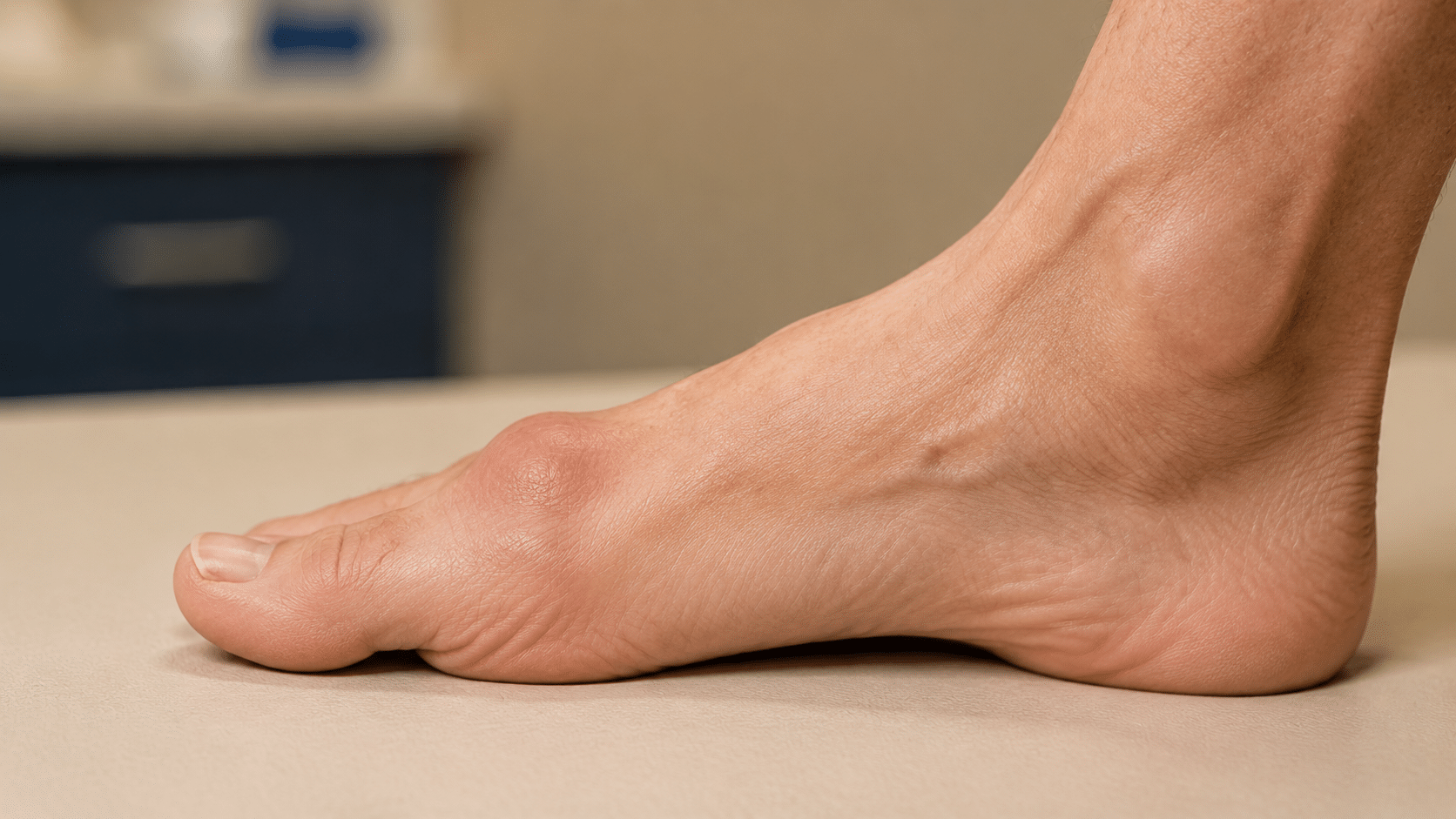
When it comes to treating bunions, hammertoes, and other painful foot conditions, many people assume that surgery means a long recovery, big incisions, crutches, and time away from their normal activities. Find out how modern minimally invasive surgery can treat bunions and hammertoes with less pain, minimal scarring, and quicker recovery times. While that used to be the case with traditional surgery, modern minimally invasive foot surgery has completely changed the experience for patients.
If you’ve been putting off surgery because you’re worried about pain, downtime, or scars, it’s worth understanding the key differences between these two approaches.
Traditional Foot Surgery
Traditional bunion or hammertoe surgery typically involves:
- Large incisions: Often several centimeters long, which means more tissue disruption.
- Hardware: Screws, plates, or implants may be used to hold bones in place.
- Crutches or casts: Patients may not be able to put weight on the foot for weeks.
- Extended recovery: Getting back into normal shoes can take months.
- More post-operative pain and swelling: Larger incisions naturally take longer to heal.
While traditional surgery can be effective, it often comes at the cost of longer downtime and more discomfort, something many busy, active patients can’t afford.
Minimally Invasive Foot Surgery
With minimally invasive techniques, the entire experience is different:
- Tiny incisions: Procedures are performed through “pokes” as small as 4mm, minimizing scarring.
- No crutches, no casts: Patients walk out of surgery the same day, often in a supportive shoe.
- No screws or implants: The techniques avoid the need for bulky hardware in most cases.
- Lower pain and swelling: Smaller incisions mean less trauma to tissue and quicker recovery.
- Faster return to activities: Hammertoe patients can often wear regular shoes in as little as 3 weeks, and bunion patients in about 6 weeks.
Because these procedures are done in-office under local anesthesia, they’re also more convenient and cost-effective than hospital-based surgery. Patients avoid general anesthesia, lengthy pre-surgical clearances, and the risks associated with bigger procedures.
Which Option Is Right for You?
Every patient is different, but for many people dealing with bunions, hammertoes, or painful calluses, minimally invasive surgery offers a modern solution that gets them back on their feet faster and with less disruption to daily life.
Dr. Michael Tagge, known as The Bunion Master, has dedicated his practice to providing advanced, patient-centered care with the most up-to-date surgical techniques. His approach combines surgical precision with cutting-edge regenerative therapies, helping patients achieve long-lasting results while minimizing pain and downtime.
The Bottom Line
The difference between traditional and minimally invasive surgery is clear: less pain, smaller incisions, faster recovery, and more convenience. For patients who value their time, comfort, and mobility, minimally invasive surgery is often the superior choice.
Ready to take the next step? Book a consultation with Dr. Tagge today to learn whether minimally invasive foot surgery is the right solution for you. Get the expert guidance you need and start your journey to walking pain-free again.