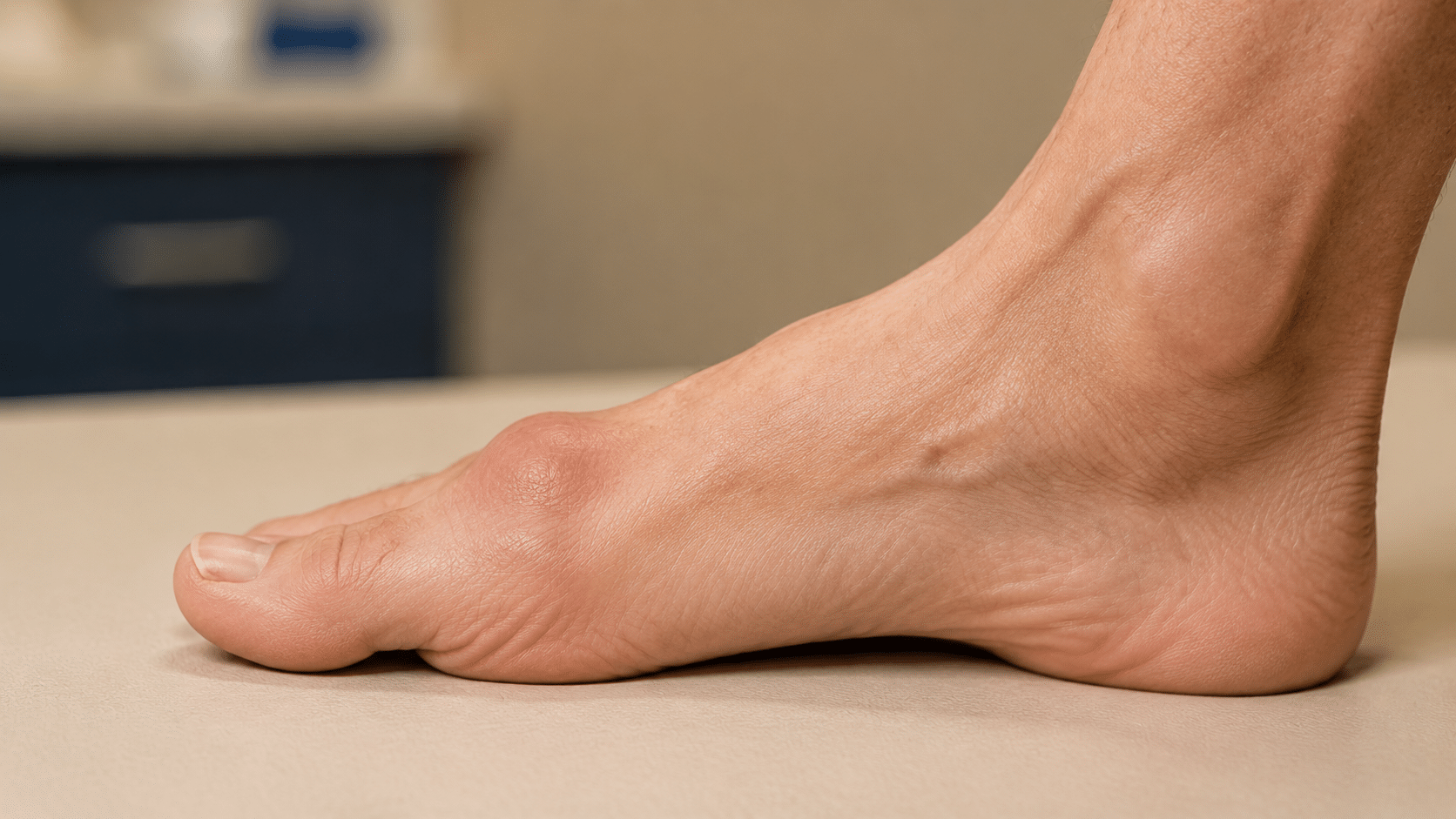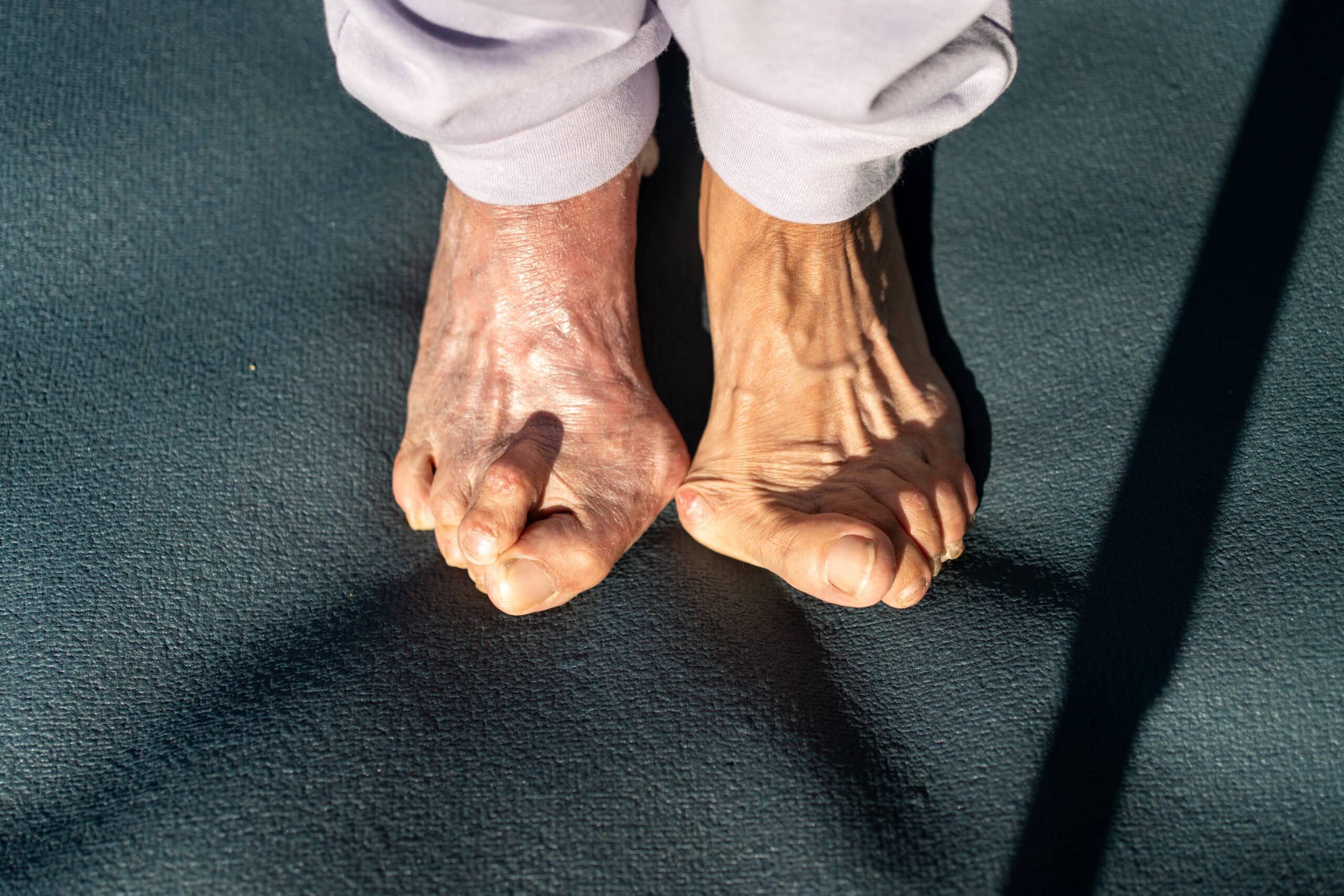
Most people think of foot pain as the problem itself. In reality, foot pain is often a symptom, a warning sign that something deeper is happening within the structure and mechanics of the foot.
Conditions like bunions, hammertoes, instability, tendon dysfunction, or joint imbalance don’t just affect the foot locally. Over time, they can change the way your entire body moves, creating stress patterns that reach the knees, hips, and lower back.
Understanding the true source of foot pain is critical because treating symptoms alone rarely solves the underlying issue.
Your Feet Control More Than You Realize
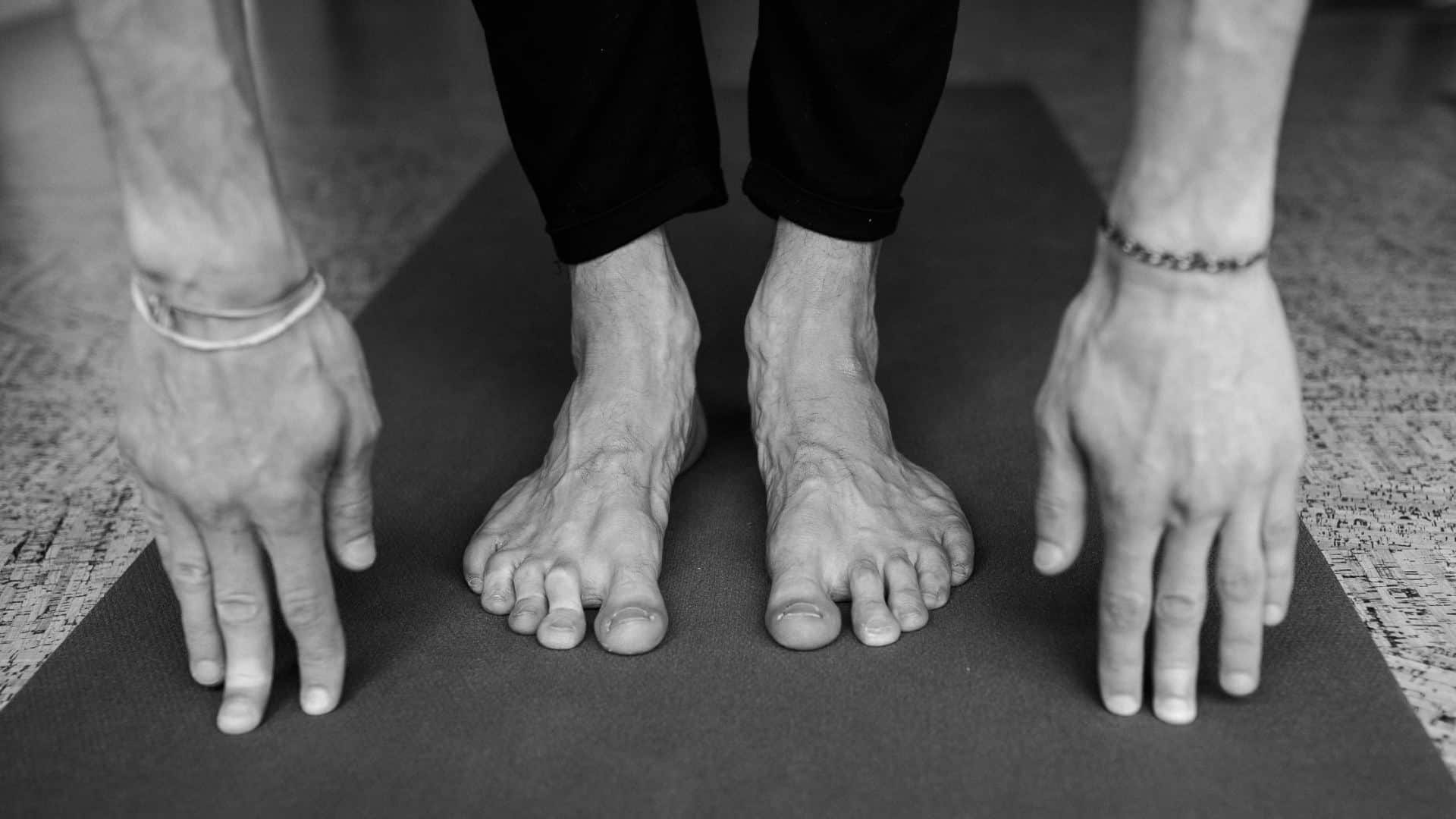
Your feet are the foundation of every step you take. They absorb force, stabilize movement, and help distribute pressure throughout the body.
When alignment begins to shift, even subtly, the body adapts. A bunion may change how you push off while walking. Instability in the arch may alter weight distribution. A stiff joint may force compensation into surrounding muscles and tendons.
At first, these changes may seem minor. But after thousands of steps each day, those compensations begin affecting the entire kinetic chain.
How Foot Problems Affect the Knees, Hips, and Back
Structural foot problems often create movement patterns that place abnormal stress on other joints.
For example:
- Bunions and forefoot instability can shift pressure unevenly across the foot, changing knee alignment and gait mechanics.
- Flat feet or excessive pronation may cause the knees to rotate inward, increasing stress on the hips and lower back.
- Tendon dysfunction or joint stiffness can limit mobility and force the body to compensate during walking or exercise.
Many patients seek treatment for knee pain, hip tightness, or chronic back discomfort without realizing the original problem may begin at ground level.
Foot Pain Is Often a Sign of Structural Dysfunction
Pain itself is usually not the root issue. It’s the body’s response to stress, instability, inflammation, or abnormal mechanics.
For some patients, the problem is inflammatory and can respond well to regenerative therapies that support healing and tissue repair. For others, the issue is structural, meaning the bones, joints, or mechanics of the foot have shifted in a way that continues creating abnormal force with every step.
In these situations, simply reducing inflammation may provide temporary relief, but it won’t fully correct the underlying problem.
When Regenerative Medicine Can Help
Modern regenerative therapies are increasingly used to support healing and reduce pain in foot and ankle conditions. Treatments such as:
- Platelet-rich plasma (PRP)
- Laser therapy
- Shockwave therapy
- Biologic injections
These treatments are often beneficial for tendon injuries, chronic inflammation, plantar fasciitis, and early joint irritation, especially before major structural damage develops.
When Structural Correction Becomes Important
Some conditions continue progressing despite conservative care. Bunions, hammertoes, crossover toes, and chronic instability often worsen over time because the mechanics causing the deformity remain active.
When structural dysfunction begins limiting mobility, altering gait, or creating persistent pain, minimally invasive correction may become the most effective long-term solution.
Modern techniques now allow many deformities to be corrected through small incisions with less soft tissue disruption, earlier mobility, and a more manageable recovery process.
Within the PRISM™ Reconstruction System, minimally invasive correction is combined with regenerative healing support and biomechanical optimization to improve both recovery and long-term stability.
Treat the Cause, Not Just the Symptoms
Foot pain is rarely random. It’s often the body’s way of signaling that something deeper needs attention.
The key is identifying whether the problem is inflammatory, structural, mechanical, or a combination of all three. Once the true source is understood, treatment can be designed to improve not only pain, but how your body functions as a whole.
If foot pain is affecting your movement, posture, or daily activity, it may be time to look beyond the symptoms.
Schedule a discovery call with Dr. Bunion Master to identify the underlying cause of your pain and explore advanced treatment options designed to help you move comfortably and confidently again.