Don’t Decide Between Living With a Painful Hammertoe and Losing Your Toe Until You Read This
“Do I Have to Lose My Toe?”
For many people with a severe hammertoe or crossover second toe, the conversation feels hopeless.
One doctor recommends living with it.
Another recommends a major reconstruction with a long recovery.
Someone else mentions amputating the toe because “it’s easier.”
If you’ve reached this point, you’re probably not just worried about your toe.
You’re worried about your independence.
You’re worried about how you’ll walk.
You’re worried about recovery.
You’re worried about making a permanent decision you’ll regret.
And if you’re developing a painful callus or ulcer from the toe rubbing against your shoe, you may feel like time is running out.
Those fears are real.
But the decision is often presented as if there are only three choices:
Live with the pain.
Remove the toe.
Undergo a large reconstructive surgery with months of recovery.
For many patients, there may be another option.
I’ve Seen This Situation Many Times Before
One of the most rewarding parts of my practice has been helping patients who believed they had already run out of options.
Many come to me after being told their second toe should simply be amputated.
Others have been advised that reconstruction would require such an extensive operation—with prolonged recovery, significant downtime, and higher surgical risk—that they decide they would rather live with the pain.
Fear of recovery is one of the most common reasons patients delay treatment. Ironically, by the time they finally seek another opinion, they often worry they’ve waited too long.
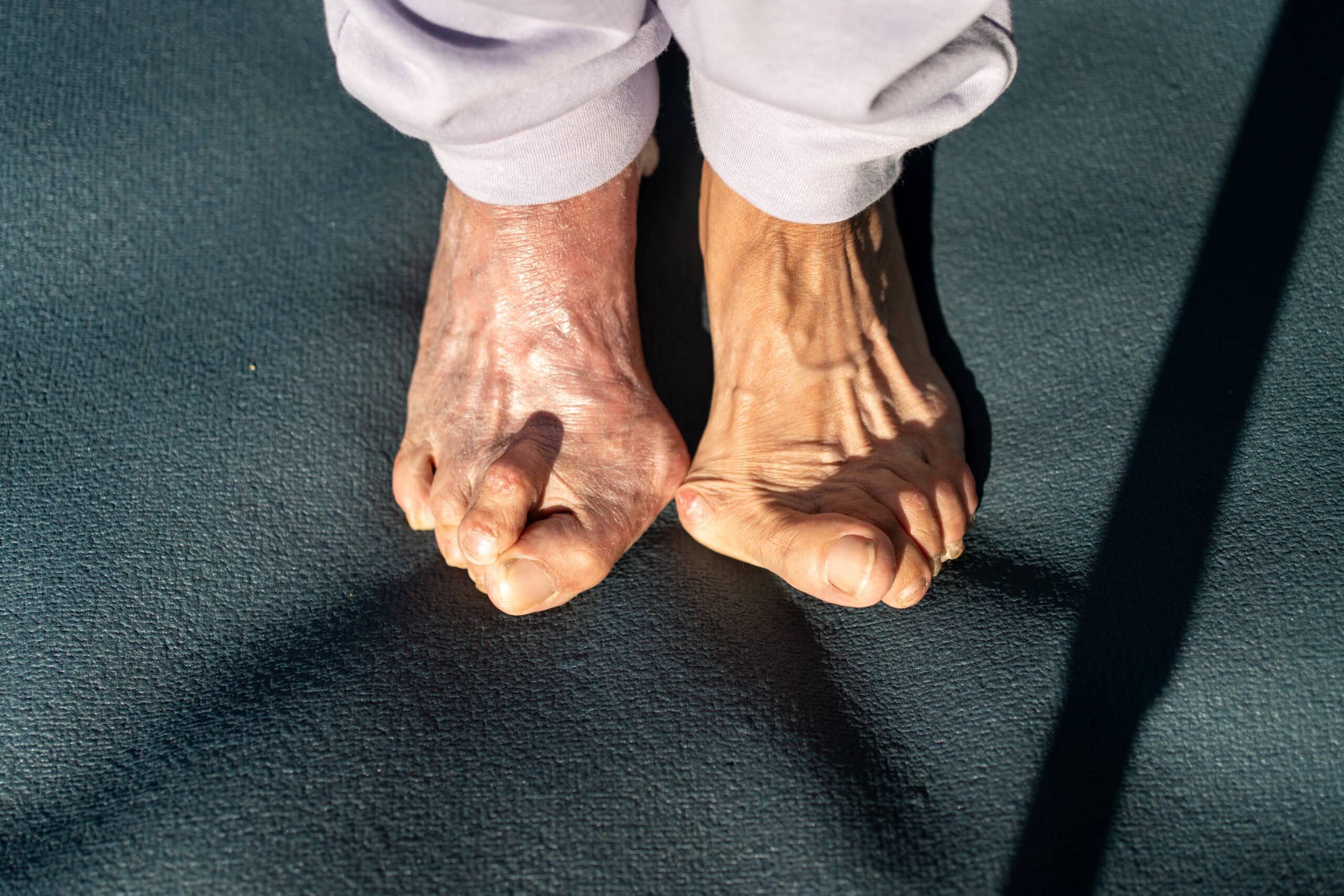
One patient who perfectly illustrates this was an 86-year-old woman who postponed treatment for years because she feared crutches, losing her independence, and a long recovery. Eventually, she was told by some that amputation was her best option. Instead, she sought another opinion. You can read her story here → I Thought I Was Too Late: An 86-Year-Old’s Journey from “Too Late” to Walking Again.
Her story is not unique.
Some patients come in with painful ulcers that simply won’t heal because the toe continues to rub inside the shoe.
Others have been told that surgery itself could place the toe at risk because of concerns about blood supply, healing potential, or the amount of correction required.
These recommendations are usually made with the patient’s best interests in mind. Surgeons must carefully balance the potential benefits of reconstruction against the risks, particularly in older adults or patients with more complex medical conditions.
The difference is that my practice is built around solving these exact problems.
Because I perform only minimally invasive forefoot surgery, I have developed extensive experience treating complex crossover toes, severe hammertoes, recurrent deformities, and patients who have been told they have few—or no—good options.
Over the years, I’ve learned that these cases are rarely one-size-fits-all.
Sometimes the solution is surprisingly simple. A carefully planned tendon release or soft tissue balancing procedure may relieve the deforming forces and eliminate the pain.
Other patients benefit from a more comprehensive reconstruction to restore alignment and function.
Still others are best served by a focused salvage procedure—doing only what is necessary to heal an ulcer, relieve pain, preserve the toe, and maintain independence while avoiding unnecessary surgical burden.
The operation should be tailored to the patient—not the patient forced into a standard operation.
That philosophy guides every recommendation I make.
Why Severe Hammertoes Become So Difficult
A hammertoe rarely becomes severe overnight.
Over time, changes in the mechanics of the foot gradually pull the toe out of position.
Frequently the visible deformity is only one part of the problem.
The underlying causes may include:
Progressive bunion deformity
Instability of the second metatarsophalangeal joint
Contracted tendons and ligaments
Abnormal weight distribution
Progressive joint dislocation
Treating only what you see without correcting why it happened often produces disappointing results.
For more information about hammertoes click here
Why Some Patients Are Offered Toe Amputation
Toe amputation absolutely has a place in medicine.
For some patients it is the safest and most appropriate treatment.
However, many recommendations are based on traditional reconstructive surgery.
Historically, reconstruction often meant:
Large incisions
Significant soft tissue disruption
Hardware
Extended periods of limited weight-bearing
Greater swelling
Longer recovery
When those are the expected trade-offs, amputation can understandably appear to be the lower-risk choice.
Modern minimally invasive reconstruction has changed that conversation for many patients.
Why My Practice Is Different
I am not a surgeon who occasionally performs minimally invasive surgery.
I am a surgeon whose practice is devoted exclusively to minimally invasive surgery of the forefoot.
That narrow focus is intentional.
Rather than dividing my attention among every aspect of foot and ankle surgery, I chose to dedicate my career to mastering one highly specialized area.
I am also dual board-certified in podiatric medicine and functional/regenerative medicine because exceptional outcomes require more than precise surgery—they require understanding how the body heals.
That philosophy ultimately led me to develop the PRISM™ Reconstruction System.
PRISM™: A Complete Reconstruction Philosophy
PRISM is not an add-on.
It is not a collection of optional treatments.
It is the philosophy through which every reconstruction in my practice is planned and delivered.
Every patient receives care built around the same objective:
Achieving the best possible long-term outcome.
That means coordinating:
Precise minimally invasive correction
Mechanical stability
Biology of healing
Soft tissue recovery
Rehabilitation
Patient education
Close follow-up
These are not separate services.
They are one integrated reconstruction strategy.
Because the surgery is only one part of the outcome.
Before Choosing Amputation, Understand Every Option
Not every toe can be saved.
Not every patient should undergo reconstruction.
And sometimes amputation truly is the best answer.
But an irreversible decision deserves a complete evaluation by someone whose practice is dedicated to minimally invasive forefoot reconstruction.
You deserve to understand why your toe became deformed, what options exist today, and whether preserving your toe is possible before deciding to remove it.
Schedule a Consultation
If you’ve been told to live with your hammertoe, undergo a major reconstruction, or consider toe amputation, don’t assume those are your only choices.
Every patient deserves an individualized plan designed around their anatomy, health, goals, and recovery—not a one-size-fits-all operation.
At Dr. Bunionmaster, every reconstruction is guided by the PRISM™ Reconstruction System: a comprehensive, outcome-focused philosophy built around preserving function, minimizing unnecessary surgical trauma, and helping patients return to the lives they want to live.
Because my goal is never simply to perform surgery. My goal is to achieve the best possible outcome.
Common FAQs About Our Surgical Approach
Can a severe hammertoe be treated without amputation?
Yes, many severe hammertoes can be reconstructed rather than amputated. Whether reconstruction is appropriate depends on factors such as the condition of the joints, blood supply, skin quality, medical history, activity level, and your personal goals.
In my practice, I frequently evaluate patients who have already been told amputation is their only option. In many cases, modern minimally invasive forefoot reconstruction can preserve the toe while relieving pain and restoring function. Every patient deserves an individualized evaluation before making an irreversible decision.
When is second toe amputation necessary?
Second toe amputation is sometimes the safest and most appropriate treatment. Situations such as severe infection, non-reconstructable tissue damage, critically poor circulation, or certain complex medical conditions may make amputation the best option.
However, not every painful or severely deformed hammertoe requires amputation. Many patients are candidates for reconstructive procedures that preserve the toe while correcting the underlying mechanical problem. The key is determining which approach offers the best long-term outcome for your individual situation.
What causes a crossover second toe?
A crossover second toe is usually the result of progressive instability within the forefoot rather than a problem isolated to the toe itself.
Common contributing factors include:
- Progressive bunion deformity
- Instability of the second metatarsophalangeal (MTP) joint
- Tight tendons and ligaments
- Abnormal foot mechanics
- Progressive joint dislocation
As the mechanics worsen over time, the second toe gradually shifts upward and across the neighboring toe, often becoming painful, rigid, and difficult to fit into shoes.
Is minimally invasive hammertoe surgery an option for older adults?
Age alone rarely determines whether someone is a candidate for surgery.
Many of my patients are in their seventies and eighties. In fact, older adults are often more concerned about maintaining their independence than anything else. They want to continue walking, traveling, exercising, and wearing comfortable shoes without prolonged recovery.
Modern minimally invasive techniques can often reduce soft tissue trauma and allow patients to recover more comfortably than traditional open surgery. The decision should be based on your overall health, circulation, healing potential, and goals—not simply your age.
How long is recovery after minimally invasive hammertoe reconstruction?
Recovery varies depending on the severity of the deformity and the specific procedures performed.
Most patients begin protected walking immediately after surgery in a specialized postoperative sandal rather than spending weeks completely off the foot.
Swelling gradually improves over several months, while bone healing and soft tissue remodeling continue during that time. Many patients return to comfortable daily activities much sooner than they expected, although every recovery is individualized.
Because every reconstruction is tailored to the patient, your recovery plan should be just as personalized as your surgery.
Can a hammertoe ulcer heal without removing the toe?
Sometimes, yes.
A hammertoe ulcer often develops because abnormal pressure continually irritates the same area. Simply treating the skin without addressing the mechanical cause frequently leads to recurrence.
Depending on the severity of the deformity and the condition of the surrounding tissues, correcting the pressure through minimally invasive reconstruction or a focused toe-salvage procedure may allow the ulcer to heal while preserving the toe.
Not every ulcer can be treated this way, but preserving the toe should always be considered when it can be done safely.
Why would one surgeon recommend amputation while another recommends reconstruction?
Different surgeons have different training, experience, and philosophies of care.
Some recommendations are based on traditional reconstructive techniques, which may involve larger incisions, more extensive surgery, longer recovery, or greater concern about healing in higher-risk patients.
My practice is intentionally different. I perform only minimally invasive forefoot surgery and routinely evaluate complex deformities that have been considered difficult or high risk. That experience allows me to consider reconstructive options that may not always be available in a more generalized practice.
The right answer is not the same for every patient. The goal is to match the treatment to the individual—not fit every patient into the same operation.
What makes Dr. Tagge's approach different?
My practice is built around one highly specialized area: minimally invasive forefoot reconstruction.
Unlike surgeons who perform a wide variety of foot and ankle procedures, I have chosen to dedicate my practice exclusively to minimally invasive surgery of the forefoot. I am also dual board-certified in podiatric medicine and functional/regenerative medicine because achieving exceptional outcomes requires more than technical surgery—it requires understanding how the body heals.
Every patient is treated through the PRISM™ Reconstruction System, an integrated philosophy that coordinates diagnosis, surgical correction, healing, stability, recovery, and long-term function. Rather than focusing only on the operation itself, every decision is made with one objective in mind: achieving the best possible outcome for that individual patient.
Should I get a second opinion before agreeing to toe amputation?
For most patients, yes.
Toe amputation is an irreversible procedure. Before making that decision, it is reasonable to seek an evaluation from a surgeon who specializes in minimally invasive forefoot reconstruction and regularly treats complex crossover toes and severe hammertoe deformities.
A second opinion may confirm that amputation is the best option—or it may identify reconstructive alternatives you were never offered. Either way, you’ll be making your decision with the confidence that you’ve explored every appropriate option.