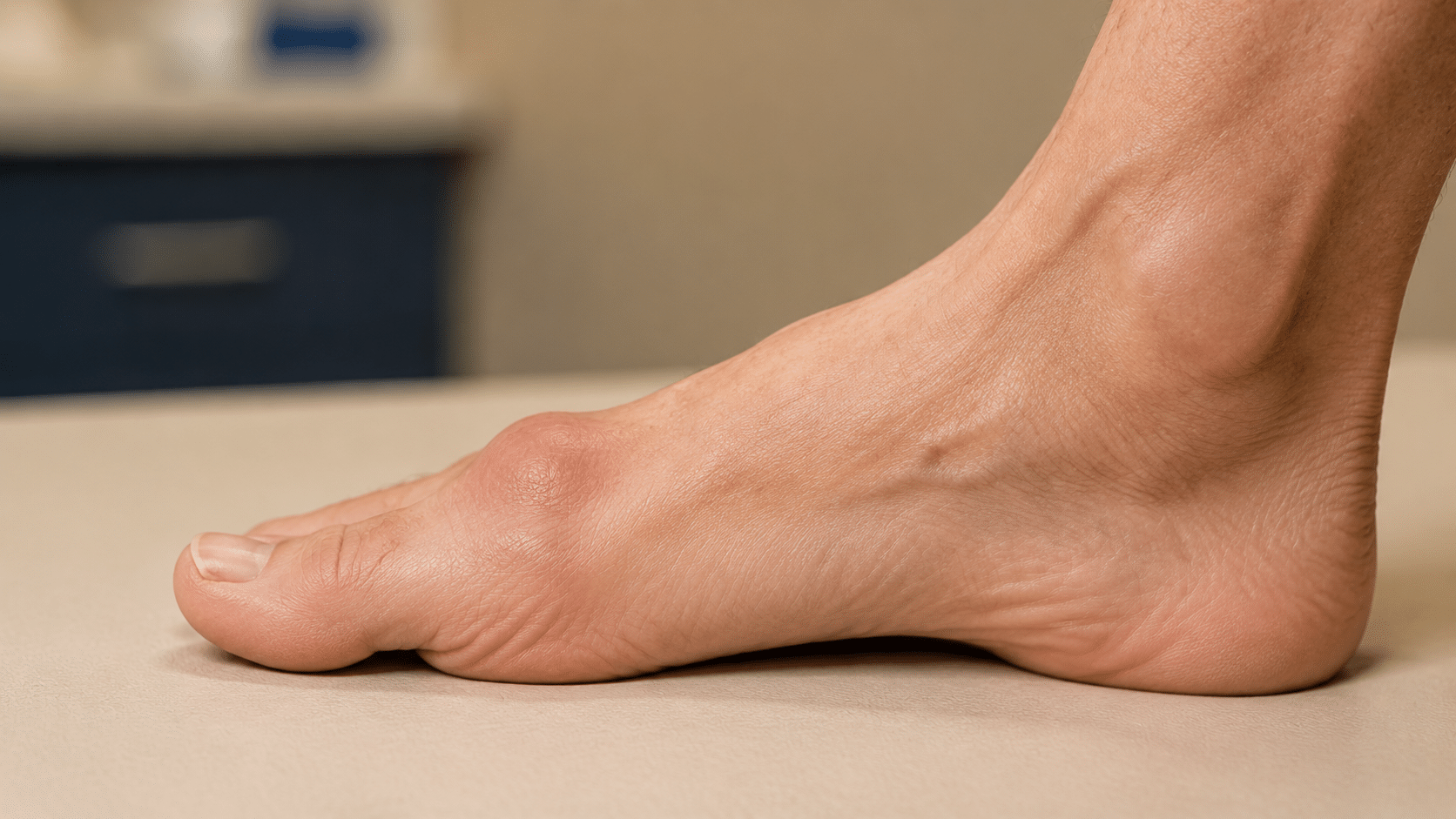
Have you noticed your big toe starting to lean inward or a small bump forming at its base? You’re not alone — and you’re not imagining things. Bunions are one of the most common foot problems we treat at Bunion Master, especially for adults 40 and up.
But here’s the truth: bunions don’t just appear overnight. They’re progressive, meaning they develop slowly over time — and the earlier you catch them, the better your chances are of avoiding long-term discomfort or surgery.
Let’s walk through some causes of bunions and what you can do now to stop them from getting worse.
What Exactly Is a Bunion?
A bunion is a bony bump that forms on the side of your foot, right where your big toe meets the rest of the foot. As the bones in the foot slowly shift out of alignment, the big toe leans inward — and the joint sticks out. That’s the bunion.
While some people only notice a slight change, others experience pain, inflammation, and trouble finding shoes that fit. The key thing to understand: bunions are structural — and they’re more than just a cosmetic issue.
Why Do Bunions Happen?
There are a few key causes, and often, it’s a combination:
Inherited foot shape. If bunions run in your family, your foot structure may naturally put more pressure on the joint.
Footwear choices. Tight, narrow, or high-heeled shoes (yes, even your favorite pair) can squeeze the toes and lead to long-term misalignment.
Arthritis or joint conditions. Inflammation in the joints can weaken the support structures around the big toe.
Flat feet or poor foot mechanics. How your feet move when you walk can gradually shift weight in the wrong places.
Age and lifestyle. As we get older, our ligaments lose flexibility — and spending years on your feet doesn’t help.
The result? The joint at the base of your big toe gradually shifts, and the bunion begins to form.
The Problem with “Waiting It Out”
One of the biggest myths we hear is, “It’s not that bad — I’ll wait and see.” Unfortunately, bunions don’t get better on their own. In fact, the longer you wait, the worse the misalignment can get — and the harder it becomes to treat without surgery.
What starts as a small bump can lead to:
Chronic joint pain
Difficulty walking
Hammertoes or other toe deformities
Joint inflammation or arthritis
That’s why we always encourage early action — especially if your bunion is starting to affect your daily comfort.
What You Can Do Right Now
The good news? You don’t have to live in pain — and you don’t need to rush into surgery either. There are simple, effective ways to slow bunion progression and relieve early symptoms:
Switch to supportive shoes. Look for wide toe boxes and avoid narrow styles that squeeze the front of your foot.
Try orthotics. Custom insoles can improve alignment and reduce joint pressure.
Watch your activity. If you’re on your feet all day, take breaks, stretch your feet, and avoid shoes with poor support.
Get evaluated early. Even a short consultation can give you a clear path forward — and peace of mind.
When Is It Time to See a Specialist?
If your bunion is:
Getting larger or more painful
Making it hard to find comfortable shoes
Changing how you walk
Causing you to avoid certain activities
…it’s time to take the next step.
At Bunion Master, we specialize in minimally invasive and advanced regenerative solutions for bunions — including custom treatment plans that fit your lifestyle. Whether you’re just noticing a change or you’ve been living with discomfort for years, we’re here to help.
Be sure to read about surgeon secrets before your consultation!
Stop the Shift Before It Gets Worse
Your feet carry you through life — and you deserve to walk comfortably at every age. If you’re seeing early signs of a bunion or if basic home treatments aren’t helping, let’s talk.
Don’t wait until walking becomes painful.
👉 Book your consultation with Dr. Bunion Master today — and take the first step toward long-lasting relief.