How I Decide Whether to Recommend Forefoot Surgery
One of the most important decisions I help patients make is whether not to have surgery.
A deformity on an X-ray is not, by itself, an indication to operate. Neither is the fact that a problem could technically be corrected. An elective reconstruction becomes worthwhile when the expected improvement is meaningful enough to justify the treatment burden required to obtain it.
That is a personal threshold, but it should not be an uninformed one.
Pain Is Only One Signal
Some patients seek help because pain has become intense. Others still describe their pain as “not that bad,” even as they have stopped wearing certain shoes, shortened walks, avoided travel, modified exercise, or begun declining plans that require standing.
Function can narrow gradually enough that adaptation feels normal. This is especially common among people whose identity is built around being capable, independent, and available to others. They keep functioning—but on increasingly smaller terms.
The decision becomes clearer when pain is considered beside function, footwear, progression, independence, and the parts of life the patient has already reorganized.
The Four Questions I Want Answered
1. What is the root problem?
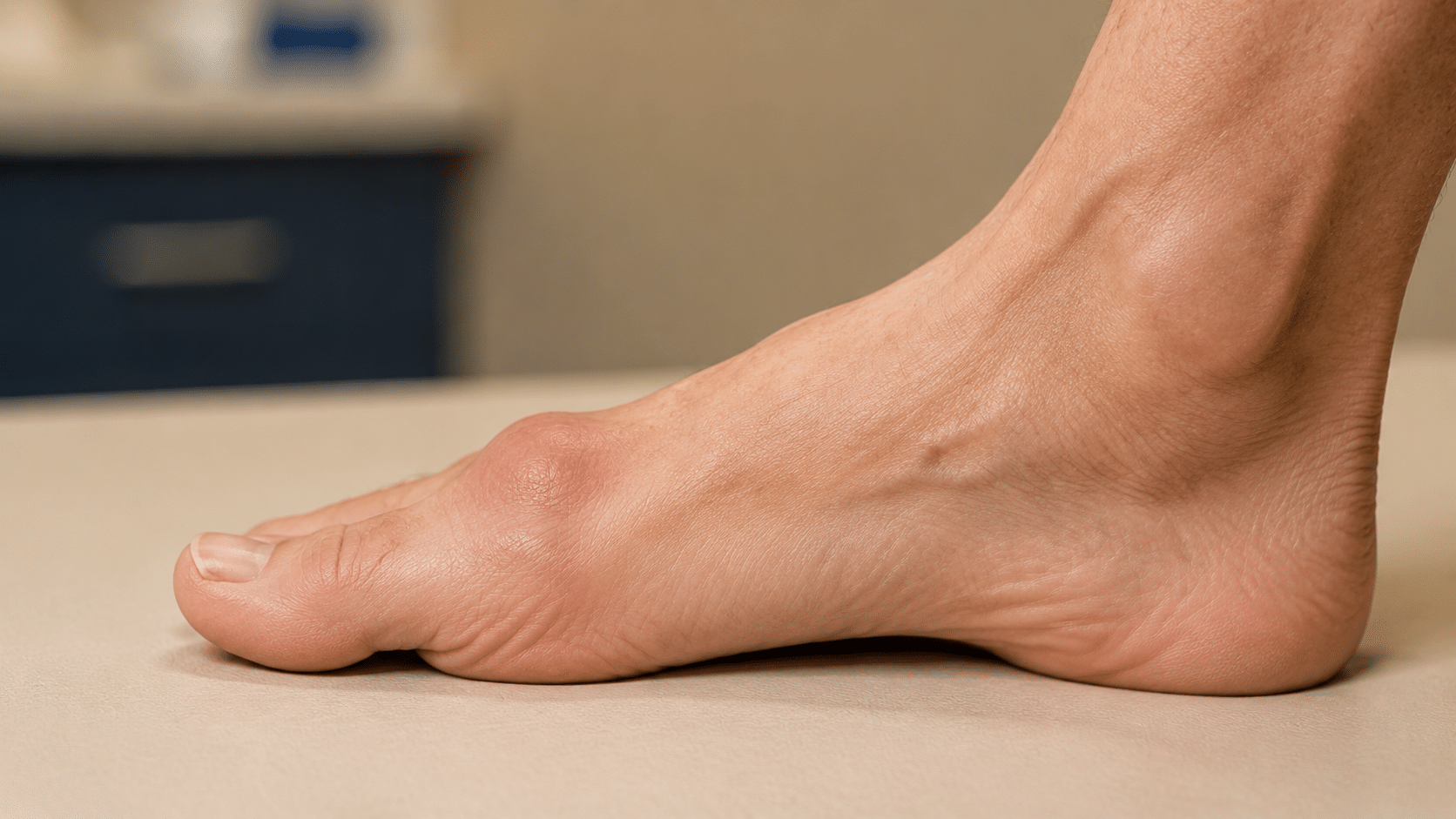
The visible toe or bump may be the result of a broader mechanical problem. Before recommending correction, I want to know which joint is painful, where load is being transferred, how the lesser toes are reacting, whether arthritis is present, and what has already been tried.
2. What is the patient trying to regain?
The destination might be running, travel, work, caring for family, wearing professional shoes, or simply walking through a grocery store without planning around the foot. A technically correct operation that does not serve that destination is the wrong plan.
3. What treatment burden would the correction create?
More surgery is not automatically better surgery. If two approaches could reasonably achieve the goal, the burden of tissue disruption, structural sacrifice, permanent hardware, general anesthesia, mobility restrictions, and recovery should matter. Dr. Tagge’s MIS cases are performed under local anesthesia, but the broader treatment-burden comparison remains relevant when a patient is evaluating other surgical pathways.
4. Is the expected improvement worth that burden now?
For some patients, the answer is no. Continued management is reasonable. For others, waiting has begun to cost more than treatment—not only in pain, but in lost activity, confidence, and independence.
Why Earlier Evaluation Does Not Mean Earlier Surgery
Patients sometimes avoid a consultation because they assume the only outcome will be pressure to schedule an operation. That is not the role of a proper evaluation.
Earlier assessment can identify joint damage, transfer pressure, nerve involvement, or progressive crowding that may narrow reasonable options if it advances. Not every deformity progresses at the same rate, and the recommendation may still be to wait.
The value is knowing what you are waiting with, which signs would change the decision, and how the plan should adapt if the condition progresses.
Why I Reserve 90 Minutes for the Comprehensive Consultation
The role of the guide begins with understanding where we need to go. I reserve 90 minutes for an initial consultation because that is what this work requires.
That protected time is used to review the full history and imaging, examine the mechanics of the entire forefoot, understand prior treatment, evaluate healing biology, surface the patient’s fears and practical constraints, and define the life the reconstruction would need to restore. It is not a hospitality feature. It is part of the clinical reasoning required to decide whether surgery should be recommended at all—and, if so, what the least burdensome appropriate correction would be.
This is also why the practice operates outside the routine insurance model. Standard in-network care can be reasonable and necessary, but it may reach its limit when the patient needs deeper root-cause analysis, surgeon-led continuity, and treatment choices organized around the complete problem rather than a series of isolated billable steps. The investment is in the evaluation, planning, judgment, and integrated recovery process surrounding the operation, not simply in the procedure itself.
Root → Fix → Heal
Root → Fix → Heal is the patient-facing reasoning framework I use to explain the decision. PRISM™ is the integrated reconstruction and recovery system through which that reasoning is executed.
Root: understand why the problem exists and what it is taking from the patient.
Fix: choose the least burdensome correction that still solves the correct problem.
Heal: deliberately support the biology, stability, mechanics, and lived recovery that follow.
The system begins before a procedure is selected. It is a way of making the decision—not a reason to operate.
The Right Next Step Is Clarity
If you have a bunion, begin with the Complete Bunion Decision Guide. If your problem involves hammertoes, a bunionette, big-toe arthritis, or another forefoot condition, a discovery call can help determine whether a comprehensive surgical evaluation would be useful.
The first commitment is not to surgery. It is to understanding whether the life you could regain reasonably justifies what treatment would require.